
Impressions of Shanghai
This is my second visit to Shanghai this year—still solo, still by train, still without notifying friends for pick-up or drop-off, still taking the bus to the hotel, still checking into my Jinjiang Inn Business Hotel, still with a tightly packed schedule, still skipping the nearby Jing’an Temple…
I’ve never felt unfamiliar with Shanghai. My father once conducted business here, and each time he returned from a business trip, he’d tell us all about Shanghai. She also studied in Shanghai—not only could she understand Shanghainese, but she could even speak some of it, often showing off in front of me and reminiscing fondly about her good times there: Nanjing Road, Huaihai Road, the Bund… So, Shanghai has always felt warmly familiar.
My first visit was in 1997, attending a human resources training program—a week-long stay. That time, I went alone to People’s Square, browsed Xinshijie Department Store, strolled along Nanjing Road all the way to the Bund, gazed upon the mighty Huangpu River, and listened to the long, resonant horns of cargo ships...
Later, after moving to Beijing, I visited Shanghai once or twice annually, gradually growing more familiar with the city—and discovering that I truly liked it: modern, fashionable, and fair. Of course, it’s not without flaws. What follows are merely scattered impressions.
First, Shanghai people. It’s commonly said that Shanghainese are xenophobic, meticulous in calculations, and unenthusiastic. My experience contradicts this. During that training session, most participants were managers from local Shanghai enterprises, and we got along exceptionally well. When they learned I was from Tianjin, everyone gathered around, asking questions left and right. One senior colleague even said: “We Shanghainese feel closest to Tianjin folks—we’re brothers! We can’t stand Beijing types.” That one sentence instantly bridged the gap—perhaps because many of us chafed under Beijing’s air of condescension. Later, when I officially registered my hukou (household registration) in Beijing and became a Beijinger, no one in Shanghai treated me differently—ha! If you perceive Shanghainese as xenophobic, perhaps you’re also subconsciously distancing yourself from them. Human emotions are reciprocal.
Shanghainese are quite amiable: if you ask for directions on the street, they’ll gladly help. True, they rarely invite guests home—but I don’t see this as unfriendly; every region has its own customs. A friend once explained why: housing has long been scarce in Shanghai. Though outwardly polished, many Shanghainese live in cramped quarters—so, face-conscious locals prefer not to host guests at home.
Shanghainese value fairness: you pay exactly what’s due, and receive precisely what you’ve paid for—no more, no less. This may seem cold, yet it inspires trust. Effort and reward align naturally—this principle feels just and reasonable. Most southerners—including those from Guangdong and Zhejiang—share this trait, and I appreciate it!
Shanghainese strictly observe rules—crossing streets illustrates this well. At red lights, even with zero traffic, people patiently wait until green. Unlike Tianjin or Beijing, where jaywalking is common.
Shanghainese are frugal—shaped by their environment: dense population, scarce land, limited resources. Sometimes even parents and children keep meticulous accounts—a practice northerners find hard to accept. Yet it’s neither unusual nor unreasonable: Americans do the same with their children—splitting meals evenly (AA system)—a cultural norm. As long as no one intends to cheat or exploit others, it’s perfectly normal and justified. Fraud or defaulting on payments is rare among Shanghainese businessmen (though exceptions exist)—my father observed this firsthand. Unlike certain northeasterners who appear naïve and warm-hearted, calling everyone “big brother” or “sister,” yet turn shrewd the moment money’s involved! (I stress: certain individuals—ha!)
Next, Shanghai women. Two words capture them: refined! While not universally beautiful, Shanghai women are undeniably attractive—primarily due to their meticulous attention to dress and grooming. Here, women wouldn’t dare appear in public without makeup—like wearing mismatched clothes. Occasionally, you’ll spot women touching up makeup while walking down the street. In contrast, many women in Beijing or Tianjin go barefaced. Early in her career, she too mastered makeup artistry—initially worrying it’d be costly to maintain. But later, adapting to Tianjin’s local customs, she simplified things—ha!—saving considerable money.
Shanghai’s transportation
Buying a car in Shanghai is tough: license plate fees cost ¥40,000–¥50,000. The government’s really shady—claiming this “ensures smooth traffic flow,” yet neither cars nor traffic congestion have noticeably decreased. Some argue, “Without restrictions, traffic would worsen!” To which I remain speechless—like a freckle-removal cream with no visible effect. When you complain to the seller, they retort: “If you hadn’t used our cream, your freckles would be far worse now!” Dizzy!
I much prefer Beijing’s municipal policy: never imposing extra license plate fees on citizens, allowing unrestricted private car purchases to safeguard basic rights—while massively expanding public transport. Now, Beijing subway fares dropped to ¥2, buses to ¥0.40; new lines like Line 13, Line 5, and the Batong Line launched; construction of additional subway lines accelerates; taxi fleets expand. Many have abandoned driving to work—even my classmates. Personally, Beijing’s overall traffic feels superior to Shanghai’s. Aside from rush-hour congestion, vehicles cruise smoothly at 80 km/h on the Third and Fourth Ring Roads. In Shanghai, traffic jams persist all day: even during off-peak hours, speeds barely hit 60 km/h. Beyond sheer volume, poor road planning contributes directly—e.g., the “Shen”-shaped network formed by the North-South Elevated Road, Yan’an Elevated Road, and Inner Ring Road looks elegant and symbolically profound, yet bottlenecked entry points severely constrain flow. The Yan’an Road Tunnel? Every car owner’s nightmare!
Shanghai’s buses are highly developed—¥2 per ride, five times Beijing’s fare. Newly opened subway lines offer decent convenience. But double-sided doors on some trains? They’ll startle you! Beijing subway veterans, beware! Honestly, Beijing’s subway feels more convenient, practical, and comfortable—likely due to familiarity.
Taxis pose the biggest inconvenience. During rush hour, dreaming of hailing one is as futile as hoping to hitch a ride on Chang’e III to the moon—just take the subway or bus. I dislike inconveniencing clients with pick-ups, preferring independent travel. Once, naively arranging to arrive at a client’s office by 9 a.m., I stepped out at 8 a.m. to wait—standing roadside for 90 minutes, sighing wistfully at passing cabs, finally boarding one at nearly 10 a.m. Such a scenario never happens in Beijing: during rush hour, a cab appears within minutes—I missed Beijing terribly then. I wonder what Shanghai’s transport authorities dream about daily.
Sometimes, to save time, I resort to “mo di”—motorcycle taxis—ha! These zip through streets and alleys, bypassing gridlock entirely—ideal for tight schedules. Yet riding them feels unnerving. Some wait roadside; others stop on signal. Learn to identify them: if a second helmet hangs on the right handlebar, it’s likely legit—prices negotiable. Though banned, mo di persistently evade enforcement. Whose fault? You figure it out.
After several frustrating, heart-pounding experiences, I wised up: “Your company wants to meet me? Please send a car!” (Feels oddly sentimental—ha!)
Sightseeing in Shanghai
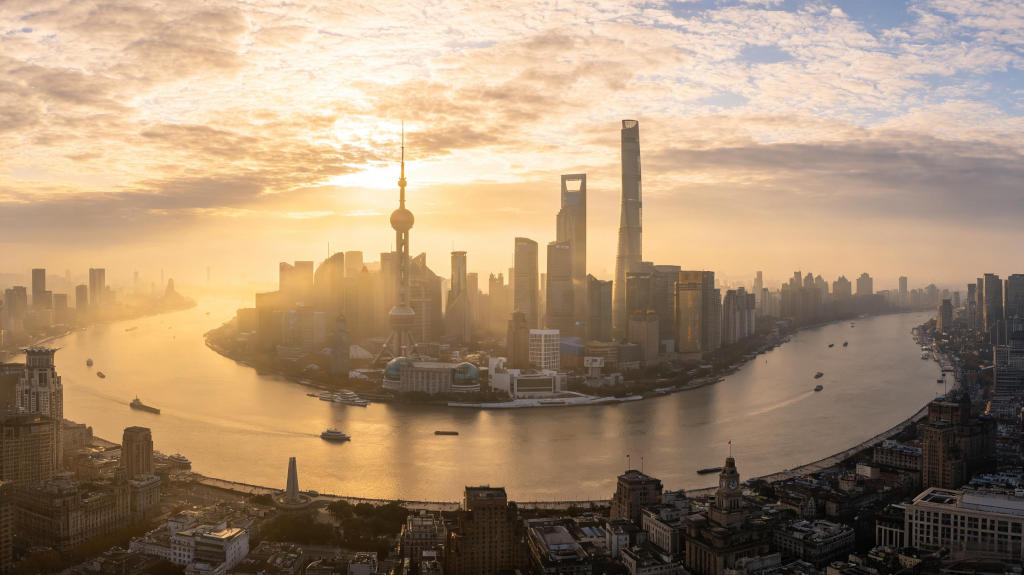
Does Shanghai offer sightseeing? Let me think… Ah—the Bund! “Waves surge, waves flow—waves cannot distinguish joy from sorrow…” Ha! Go relive Xu Wenqiang and Cheng Cheng’s romance. Visiting Shanghai without strolling Nanjing Road, seeing the Bund, gazing at the Huangpu River, or admiring the Oriental Pearl Tower and Pudong’s skyscrapers across the river means you haven’t really been to Shanghai. She says most locals shop on Huaihai Road—I agree it’s more worth exploring than Nanjing Road, which attracts more out-of-towners. Both commercial streets stretch interminably—your feet ache just walking them! When Shanghainese visit Beijing’s Wangfujing, they’re baffled: “How can such a short street—with so few shops—be worth touring?” Ha!
In Shanghai, savor authentic Western cuisine, Japanese food, Korean BBQ—the flavors and ambiance are genuinely top-tier. Bars and cafés are must-visits: Shanghai leads nationally in authenticity and cosmopolitan flair—likely due to its large foreign population. Pro tip: visit bars with a local guide.
Shanghai’s climate
Spring and autumn are delightful—especially spring, with low-hanging clouds seeming touchable, drifting and morphing with the wind. Northerners see such simple beauty only in fairy tales. Winters are damp and chilly—no central heating. Southerners adapt easily, but northerners suffer. Worst is the plum rain season—I experienced it this year. Walking outside, sweat gushes nonstop—sizzle-sizzle—my shirt clings like freshly wrung laundry. Without this thin layer of cloth, I’d be a walking fountain.
Other Shanghai observations
Shanghai has China’s priciest real estate; hosts numerous foreign enterprises—employees often sprinkle English mid-sentence, treating it as chic; most locals (and migrants) hustle relentlessly for livelihood or better lives—survival pressure runs high; native Shanghainese proudly speak Shanghainese—proud? Or self-deceiving? This time, checking into the hotel, I overheard locals booking rooms—and surprisingly understood them clearly. Puzzling…
Shanghai’s culture
All the above is Shanghai’s culture. What defines a city’s culture? It’s the distinct, palpable sense you get wandering an unfamiliar metropolis—the deep, unmistakable feeling of difference. That is a city’s culture—or its personality, akin to human character.
Final thoughts on Shanghai
Let me describe my accommodation: Jinjiang Inn Business Hotel. Our company imposes no hotel requirements; previously, I booked via Ctrip or Elong. My standards are modest: safety, cleanliness, comfort—no need for prestige. I believe honor stems from inner qualities, not lodging addresses. My first stay here was arranged by a friend—affordable, comfortable, meeting my needs.
Then came an incident sealing my loyalty—and making me a member. Flying from Beijing to Chengdu, I pre-booked this hotel, scheduled to arrive at 9 p.m. The reservation confirmed room hold until 9 p.m. But weather delayed all Beijing flights—departure time unknown. Hotels typically hold rooms only until 6 p.m., and Chengdu hosted a liquor fair—peak demand. With no flight hope, I called again requesting extended hold. Staff said they could extend two hours within their authority. After two delays, I hesitated to call again—left it to fate. Ultimately, my flight arrived over three hours late—nearly 1 a.m. Entering the lobby, I found the duty manager and staff waiting. Seeing me, they visibly relaxed. Before I spoke, they chorused: “You’re Mr. Zhou, right? We’ve been waiting for you! Headquarters notified us of the Beijing flight delay and specifically instructed us to hold your room…”—felt like coming home…
Later, I researched Jinjiang Inn’s corporate culture: headquartered in Shanghai, it’s a dedicated, forward-thinking hotel group. As China’s leading business-chain hotel operator, it boasts the widest network. In any major city, you’ll find one—uniform, thoughtful room layouts and services make strangers feel instantly at home. Their earnest drive is precisely what many Chinese enterprises lack.
That’s all my impressions—I’ve probably only touched the elephant’s… If you truly want to understand Shanghai, experience it yourself.
Time to leave Shanghai again—still traveling solo. Shanghai’s night view dazzles: tiered skyscrapers glow with neon brilliance. Amid this splendor live these people—I send them heartfelt blessings! And me? Departing happily? Or with quiet regret? I’m unsure! I only know my next drifting destination is—Hangzhou!
Midnight